
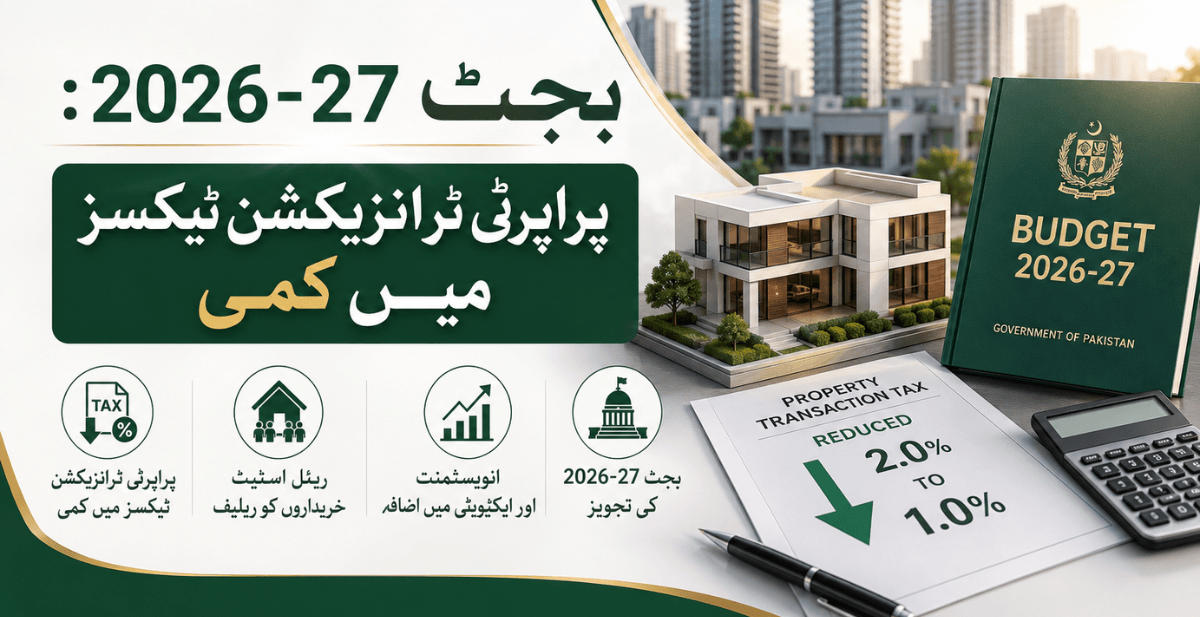
The upcoming Federal Budget 2026-27 may bring significant relief for Pakistan’s real estate market, as the government considers reducing key property transaction taxes to stimulate investment and revive market activity. Recent reports suggest that the Federal Board of Revenue (FBR) is working on several reforms aimed at making property transactions more affordable and transparent for both local and overseas investors.
For years, high transaction taxes, complex valuation systems, and economic uncertainty have slowed activity in Pakistan’s property sector. Industry experts believe that the proposed reforms could help restore investor confidence and encourage greater participation in the market.
Government Plans to Reduce Property Transaction Taxes

One of the most anticipated measures in the upcoming budget is the reduction of transaction-related taxes on real estate. The government is reportedly considering cuts in both Withholding Tax (WHT) and Capital Gains Tax (CGT), two major costs associated with buying and selling property.
These taxes have long been viewed as barriers to investment because they increase the overall cost of property transactions. A reduction in these taxes could make real estate more accessible for investors, homebuyers, and overseas Pakistanis looking to invest in their homeland.
Why Are These Tax Reforms Important?
Pakistan’s real estate sector plays a crucial role in the national economy. It supports construction activities, generates employment opportunities, and contributes significantly to economic growth.
However, in recent years, increased taxation and stricter documentation requirements have reduced transaction volumes in many property markets across the country. Industry stakeholders have consistently called for a more investor-friendly tax structure to encourage legal and documented investment in the sector.
The proposed reforms aim to:
- Lower the cost of property transactions.
- Increase market liquidity.
- Encourage overseas Pakistani investment.
- Promote documented real estate dealings.
- Support the construction and housing sectors.
- Improve overall investor confidence.
FBR Negotiations with IMF Continue
According to reports, the FBR has informed the National Assembly Standing Committee on Finance that discussions are ongoing with the International Monetary Fund (IMF) regarding the proposed reduction in withholding tax rates on property transactions.
Since Pakistan’s fiscal policies are often linked with IMF agreements, any major tax reduction requires careful negotiation. If approved, these changes could become part of the Finance Bill 2026-27 and provide substantial relief to buyers and sellers alike.
Reduction in Property Valuation Rates
In a move that has already provided some relief to investors, the FBR recently reduced property valuation rates by approximately 30% to 35% in several major cities, including:
- Islamabad
- Rawalpindi
- Faisalabad
- Sialkot
- Multan
- Bahawalpur
- Gujranwala
The revised valuation rates became effective from April 22, 2026. Lower valuation rates directly impact the amount of tax payable during property transactions, making property purchases and sales more affordable.
Harmonization of FBR and DC Rates
Another major reform under consideration is the harmonization of FBR valuation rates with Deputy Commissioner (DC) rates.
Historically, property transactions in Pakistan have been complicated by the existence of multiple valuation systems. FBR rates are used for federal tax purposes, while provincial authorities rely on DC rates for other taxes and fees. The gap between these valuations often creates confusion, delays, and inconsistencies in taxation.
By aligning these valuation mechanisms, the government aims to:
- Simplify the taxation framework.
- Improve transparency.
- Reduce disputes during transactions.
- Encourage documented property dealings.
- Create a more investor-friendly environment.
Impact on Overseas Pakistanis
One of the primary objectives behind these reforms is attracting investment from overseas Pakistanis. The government recognizes that millions of Pakistanis living abroad contribute significantly to the economy through remittances and investments.
Reducing transaction taxes and simplifying property regulations can make Pakistan’s real estate market more attractive for overseas investors who often face additional costs and procedural challenges when purchasing property.
What Could This Mean for Property Prices?
While lower taxes do not automatically increase property prices, they can improve market activity by encouraging more buyers and sellers to enter the market.
Historically, reduced transaction costs tend to increase demand, particularly in premium housing societies and emerging investment zones. Increased activity can support property values and contribute to healthier market growth over the long term.
However, actual market performance will depend on several factors, including economic conditions, interest rates, inflation, and investor confidence.
Opportunities for Investors
If these proposed measures are approved in the Budget 2026-27, investors may benefit from:
- Lower transaction costs.
- Improved return on investment.
- Easier property transfers.
- Better market liquidity.
- Increased buyer activity.
- Greater participation from overseas Pakistanis.
For both end-users and investors, the coming fiscal year could present new opportunities in Pakistan’s real estate sector.
The One Group’s Perspective
The One Group, we believe these proposed reforms have the potential to create a more dynamic and investor-friendly real estate market. Lower transaction taxes, simplified valuation mechanisms, and increased transparency can help restore confidence and support sustainable growth across the sector.
For investors exploring Pakistan’s best housing project investment opportunities, developments such as DHA Gandhara Islamabad, Capital Smart City, Kohistan Enclave and Lahore Smart City continue to attract strong interest due to their strategic locations, modern planning, and future growth potential. With reduced transaction costs, these projects could witness increased demand from both local and overseas investors.
Whether you are planning to buy your first property, expand your investment portfolio, or explore emerging real estate opportunities, staying informed about upcoming budget measures can help you make smarter investment decisions.
Final Thoughts
The Federal Budget 2026-27 could mark an important turning point for Pakistan’s property market. Proposed reductions in Withholding Tax and Capital Gains Tax, along with valuation reforms and efforts to attract overseas investment, demonstrate the government’s intention to revitalize the sector.
While the final budget announcement will determine the exact scope of these changes, investors and stakeholders across the country are closely watching developments that could shape the future of Pakistan’s real estate industry.
As the market evolves, The One Group remains committed to helping investors identify opportunities and navigate the changing real estate landscape with confidence.